This website use cookies for best experience. For more details read our Cookie Policy and Privacy Policy.
The 28th Regime (EU)
Independent, primary-source tracking of the 28th regime, the proposed optional EU company form.
Where the file stands, who wants what, and the next real dates, with the documents behind them.
Current status: In negotiation, no final law yet. Parliament's Legal Affairs Committee did not vote on its draft report on 8 October as planned; press reports put the vote at 19 October, with employee participation still open between the political groups. The Council's working party is examining the Irish Presidency's compromise texts, with sessions listed into November.
Last updated: 18 October 2026
Our 29 September issue sets the end-2026 target against the dates actually on the calendar. The newsletter is free, roughly every two weeks, and you can unsubscribe at any time.
Sign up to newsletterWhere to start
Pick the path that fits why you are here.
Following the file as an advisor, legal team, or policy professional.
Start with Progress for the timeline and primary documents, and Resources for institutional briefings and law-firm analyses.
New to the 28th regime and EU Inc.
Read the latest status below and the FAQ, then to see how EU-Inc., Regime-O, and the wider 28th regime differ check Compare proposals.
A founder or operator who expects to use EU Inc.
EU Inc. is still in negotiation and will not be usable for some time, so there is no rush. Some groundwork does not depend on the final text, and Templates & checklists sets out what is worth preparing now, including a free readiness checklist.
Why this matters
Scaling across the single market still means re-solving the same company setup, governance and compliance problems country by country. That friction works like a tariff paid in overhead rather than at a border.
The 28th regime would be an optional EU-level rulebook a company could choose, so operating across member states comes closer to one set of rules instead of 27 variations. The design details (scope, safeguards, and how it interacts with national labour and tax rules) will decide whether it becomes true simplification or a compromise layer.
Latest status
Last updated: 18 October 2026Parliament's Legal Affairs Committee (JURI) did not vote on the rapporteur's draft report on 8 October, the date on its draft agenda. Press reports from ANSA, Agence Europe and Table.Briefings say the political groups had not reached agreement and that the vote is expected on 19 October. The open point is employee participation.
The Council's working party is examining the Presidency's compromise texts, with sessions listed into November. The sessions are closed and publish no readouts.
The Irish Presidency wants trilogue in November and political agreement by the end of 2026. Neither Parliament nor the Council has a negotiating mandate yet. The progress tracker has the full timeline and source links; subscribe for the next issue.
Previous status
Updated: 18 September 2026On 7 September, JURI took up the 1,418 amendments filed against the draft report. The rapporteur named where they cluster: workers' rights and employee participation, preventive control (the checks a company faces before it is registered), the stock option scheme, and the legal basis. He asked each political group for its priorities and opened negotiations the same evening. No compromise amendments exist yet and no committee vote is scheduled; the next sitting is 28 September.
In the same sitting the Irish Presidency set out its timetable: a Council negotiating mandate as soon as possible, trilogue in November, political agreement by the end of 2026. Those are targets stated to a committee, not scheduled stages, and neither co-legislator has a mandate yet. The Commission offered to write into the articles what so far sits only in a recital: that the regulation does not touch labour law, social security or taxation, beyond the timing of tax on employee stock options.
The Council's working party has been back in session since 1 September, meeting again on 10 and 17 September, with further sessions listed into November; the sessions are closed and publish no readouts. No official readout of the JURI sitting exists either; our account is transcribed from the webstream. The progress tracker has the full timeline and source links. Our 9 September issue reads the amendments group by group; subscribe for the next one.
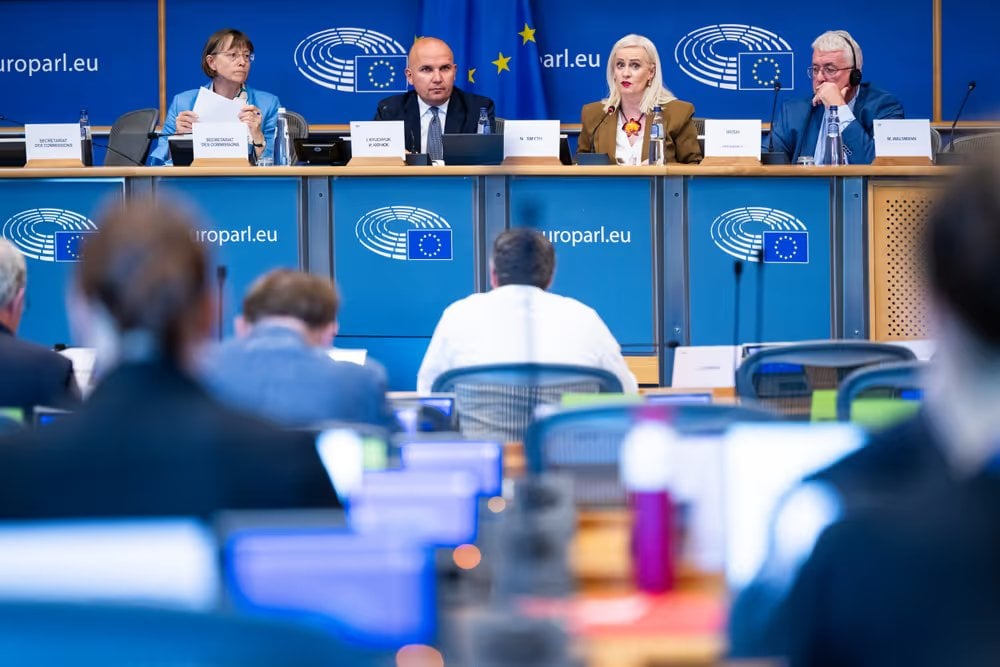
Minister of State Niamh Smyth at JURI, 7 September 2026.
Photo: © European Union 2026, Source: EP.
Previous status
Updated: 23 August 2026On 15 July, JURI debated the draft report, and the political groups divided over how far the 28th regime should reach: whether it stays open to all companies or is limited to start-ups, whether it remains a regulation on Article 114 or shifts toward an Article 50 directive, and whether it can bar public listing and exclude whole sectors. The progress tracker has the group-by-group breakdown; our 23 July issue mapped where each group stands.
René Repasi's draft report on the 28th regime is dated 29 June 2026: reference PE790.143v02-00, 151 pages, 246 amendments to the Commission text. It is the rapporteur's opening rewrite, not yet the committee's position. The headline changes proposed: Article 4 (national law of the registration country as gap-filler) is deleted in favour of a labour-law firewall and designated national reference forms; eligibility becomes a numeric startup definition plus a list of excluded sectors (Annex Ia); public listing is banned outright; and two new options appear, a steward-owned variant (EU Inc. SO) and an employee stock ownership plan (EU-ESOP). The two-working-day, EUR 100 formation promise survives, subject to new identity and anti-fraud checks. Full analysis: inside the European Parliament's draft report.
Procedure: the political groups' amendment window closed on 17 July, and the amendments filed are listed in the procedure file as PE791.127 to PE791.131, dated 22 July 2026. ECON delivered its opinion in the form of a letter on 15 July (PE788.878, adopted 34 to 13 with 9 abstentions): it backs the proposal but wants EU Inc companies allowed to access public markets and an optional tax module added. The EESC also adopted its mandatory advisory opinion on 15 July (INT/1123-EESC-00744-00-00-AC). JURI was due to take up the amendments at its 7 September sitting, with a committee vote expected in September (tbc) and plenary indicatively forecast for October.
In the Council, Coreper discussed "guidance for further work" on 15 July (ST 11522/26), but no public outcome is available. The Company Law Working Party met on 23 July and examined the Irish Presidency's compromise text (ST 11829/26). Nothing has been published from that session, and the compromise text itself is registered but access-restricted. Press reports from before the session (Europe.Table, 21 July; Euractiv, 20 July) describe it as dropping the insolvency chapter, keeping the contested legal basis and setting co-determination aside for now; the document is unpublished, so treat these points as reported, not confirmed. Technical work resumes on 1 September, with further sessions listed through October and a ministerial policy debate provisionally listed for 24 September (ST 10983/26). For the full legislative timeline and source links, see progress.

Draft report PE790.143, Committee on Legal Affairs, 29 June 2026.
Previous status
Last updated: 27 June 2026On 28 May, COMPET ministers held the first minister-level debate on the 28th regime. The signal was momentum, not agreement on text: safeguards, legal certainty, labour rules, tax, insolvency, and the Article 114 legal-basis question all remain open. Twenty-six delegations spoke; the first public country groupings are now visible. For the full breakdown, read our analysis of the first public country positions.
Council technical work continues. Sessions 6, 7, 8, and 9 were held on 2, 11, 17, and 25 June respectively. Session 7 (agenda CM-3040/26, Europa Building) took the formation and governance chapter (Articles 35 to 58), with Parliament's Employment Committee (EMPL) present, the most politically sensitive chapter so far, covering codetermination and worker board representation. No public readout has appeared from any session. Further confirmed meetings on 2, 8, and 23 July continue under the Irish Presidency, which takes over on 1 July.
In Parliament, René Repasi (S&D, Germany) is rapporteur for the file. His draft JURI report is expected on 26 June, the first text-level EP position on the file. Axel Voss (EPP, Germany/CDU) is now confirmed as the EPP shadow rapporteur. Amendments are due on 17 July; the committee vote is expected in September (tbc); plenary vote (tbc). At the time, early 2027 was discussed as an operational ambition. The proposal itself says its main rules apply 12 months after entry into force, so the actual date depends on final adoption and publication.
For the full legislative timeline and source links, see progress.
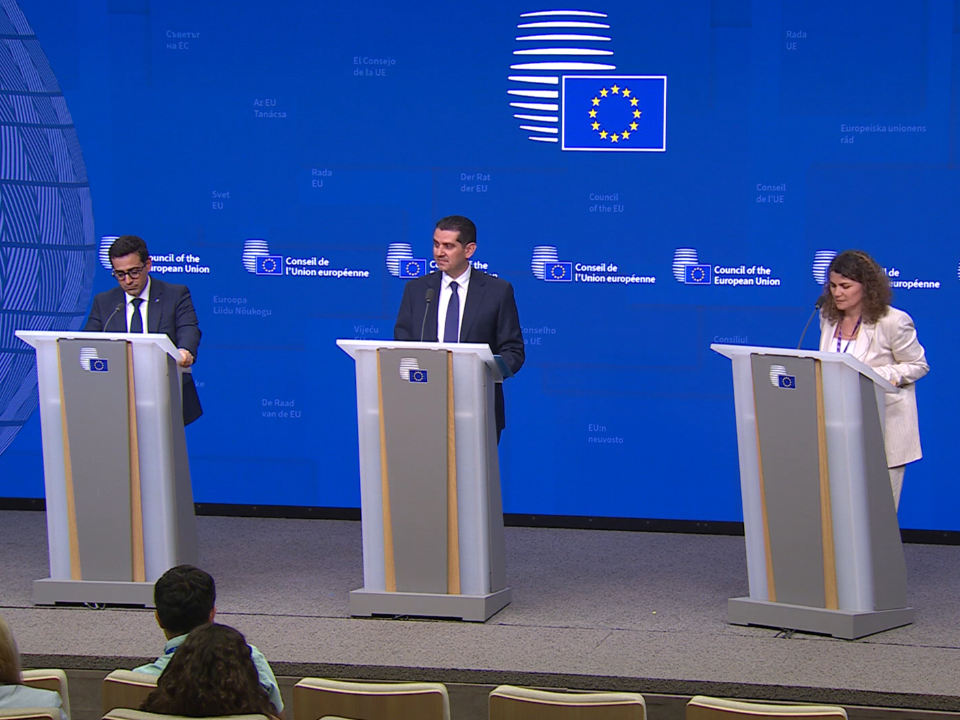
COMPET ministerial debate on EU Inc., 28 May 2026.
Previous status
Updated: 22 May 2026Five Working Party sessions had been held since March, with Session 5 on 18 May the most recent. No public readout from any session had appeared on the Council register. The compound readout for Sessions 3-5 was expected to surface around or after the COMPET ministerial meeting.
The 28-29 May COMPET ministerial Council had EU Inc. confirmed as item 2 on the 28 May agenda, under public deliberation rules. That made it the first formal minister-level debate on the proposal. Ireland was due to present its incoming Presidency work programme at the close of both days, confirming the legislation would continue into H2 2026.
In Parliament, the rapporteur for procedure 2026/0074(COD) was still pending. Commissioner McGrath had presented the proposal to JURI, Parliament's Legal Affairs Committee, on 4 May. Later Working Party sessions were scheduled for 2 June and 17 June.
For a detailed look at what the 7 May ECGI, Bocconi, and LawFin workshop surfaced about EU Inc.'s legal design, read our editorial report from the 7th LawFin Workshop.
.jpg)
Lex building, Brussels.
Photo: Trougnouf (Benoit Brummer), CC BY 4.0, via Wikimedia Commons.
Previous status
Updated: 29 Apr 2026Three Council Working Party sessions have now been held (23 March, 17 April, and 27 April) and no public readout or outcome note is visible from any of them. The next institutional milestones are the JURI Committee meeting on 4 May and the two-day Council Session 4 on 6–7 May, with further Council sessions already listed for 18 May and 2 June. The file is under steady technical examination, but the schedule is now more informative than the readouts.
The European Parliament's JURI Committee (Parliament's Legal Affairs Committee) has still not named a rapporteur. Commissioner McGrath presents the proposal to JURI on 4 May, and the rapporteur is expected at or shortly after that meeting. If you want the plain-language version of who does what, see what JURI is and what the rapporteur does.
The most substantive public debate so far happened on 21 April, when the EESC Workers' Group and the ETUC held a full-day conference titled "28th Regime: Why are alarm bells ringing?" Commissioner Michael McGrath said competitiveness cannot come from weaker worker protection, and MEP Rene Repasi warned that a regime with too many routes for abuse could damage the project before it proves itself. The central unresolved question from the conference: how collective rights, bargaining, board representation, are governed when a company registers in one member state but operates mainly in another.
One practical follow-on from the late-April newsletter: readers were especially interested in the April EPRS briefing on the proposal. It is still the clearest short institutional summary of the legal route behind EU Inc., why the Commission chose a Regulation under Article 114 TFEU, where Parliament's earlier position pointed to Articles 50 and 114 together and preferred a Directive, and why that treaty choice matters.
For the full timeline and primary docs, including the EPRS note, see progress. For the plain-language explainer of JURI, the rapporteur, trilogue, and Article 114, see JURI, rapporteur, trilogue, and Article 114 in the FAQ. For the late-April coverage, see the EESC debate on EU Inc and worker protection.
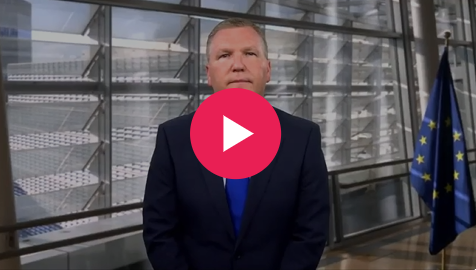
Michael McGRATH, Commissioner for Democracy, Justice, the Rule of Law and Consumer Protection, video message, EESC Workers' Group conference, 21 April 2026.
Excerpt on YouTube ·
Morning session ·
Afternoon session ·
Programme
© European Union, 2026. Source: European Economic and Social Committee (EESC)
Previous status Updated: 21 Mar 2026
On 19 March 2026, the European Council endorsed the "One Europe, One Market" agenda and named the 28th regime for company law as a priority measure for 2026. Leaders called on the co-legislators to adopt it by the end of 2026, on the basis of the Commission proposal of 18 March. Antonio Costa confirmed at the post-summit press conference that the timeline is end of 2027 but mostly this year, in 2026.
No new legal text was published. The only legal text remains the Commission proposal of 18 March. What changed is the political level: EU Inc. is now an endorsed European Council priority with a deadline.
Full stored update: EU leaders back EU Inc - from proposal to political priority.
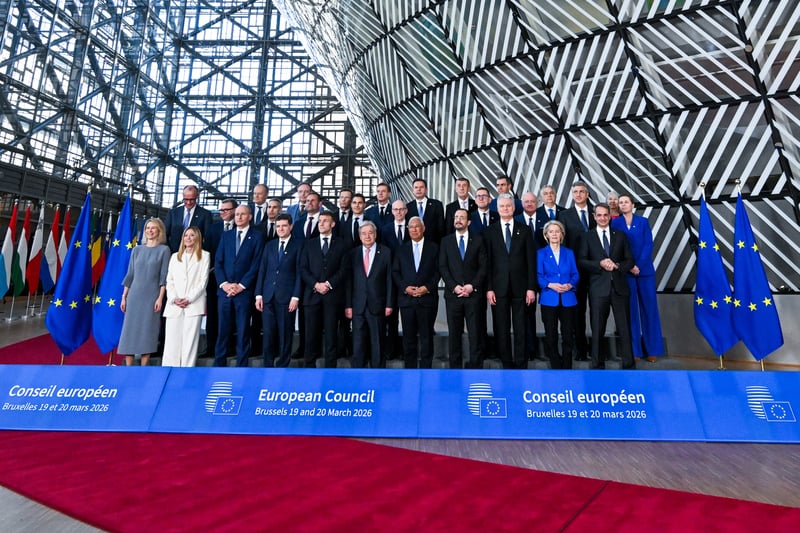
Previous status Updated: 18 Mar 2026
The European Commission has now published the EU Inc. proposal together with the wider 28th-regime package: the Communication, the draft corporate framework, the annex, factsheet, and impact-assessment papers. This is the real shift from expectation to text - the debate can now move from whether the proposal will appear to what the legal text actually creates, what is still missing, and what may change in the legislative process.
The core offer is an optional EU-wide company framework designed to make incorporation and cross-border operation simpler: faster digital registration, lower setup costs, digital-by-default procedures, easier share transfers, digital insolvency, and an EU-level stock-option approach aimed at making startups and scaleups easier to build and finance in Europe.
Full stored update: EU Inc. Proposal Explained: What the Official Documents Actually Say.
Previous status Updated: 24 Feb 2026
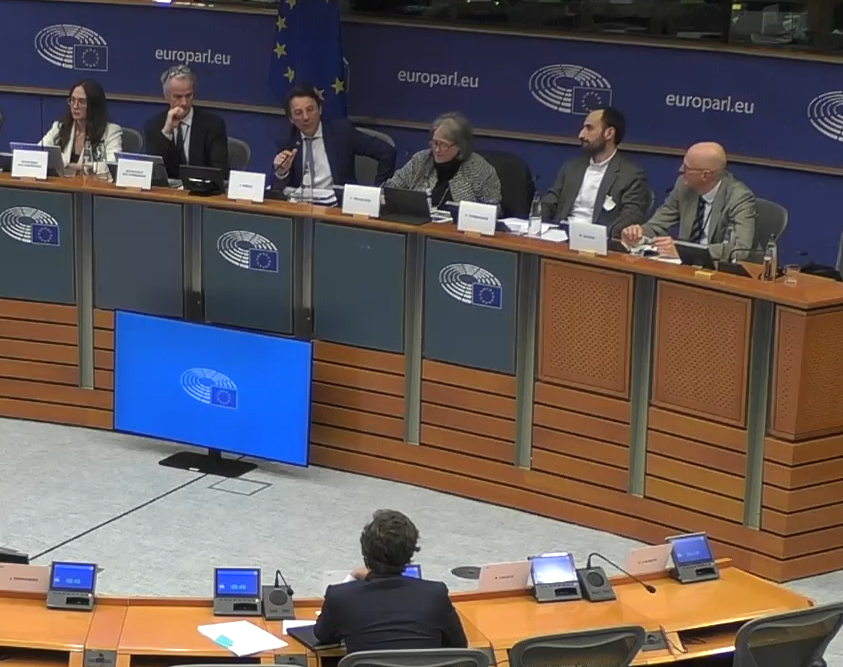
Parliament's tax subcommittee (FISC) held a public hearing on the feasibility of a "28th tax regime" - a clear sign that tax barriers and incentives are now being discussed alongside the upcoming EU-Inc / 28th-regime corporate proposal. Three expert groups (Bruegel, CEPS, ETAF) presented directions; the common ground was a narrow, practical scope focused on equity and stock-option treatment and administrative simplification rather than broad tax harmonisation.
The hearing surfaced three distinct approaches - Bruegel argued for a targeted digital hub with equity taxation at sale (not at grant) as the key lever; CEPS proposed modular tax-interoperability layers (loss relief, mobility rules, VAT and withholding simplification) added gradually on top of the corporate-law base; ETAF supported single-entry reporting but warned that substantive tax changes trigger Council unanimity and risk adding parallel complexity. The rapporteur, Ludovit Odor, pushed throughout on whether the regime needs a tax element to be attractive in practice - MEPs converged on digital-by-default setup, tax neutrality for opting in, and a credible fix for stock-option treatment as the realistic minimums.
Stored in the newsletter archive.
Previous status Updated: 15 Feb 2026
The European Parliament has formally adopted recommendations supporting a harmonised 28th regime for innovative companies, including fast digital incorporation and cross-border operation features; this feeds into the European Commission's upcoming legislative work.
What's changed is timeline clarity: the European Parliament's Legislative Train tracker currently lists the Commission proposal as scheduled for 18 March 2026. We're also monitoring for publication before the March European Council (19-20 March 2026). Note: scheduled means planned, not guaranteed - calendars can slip.
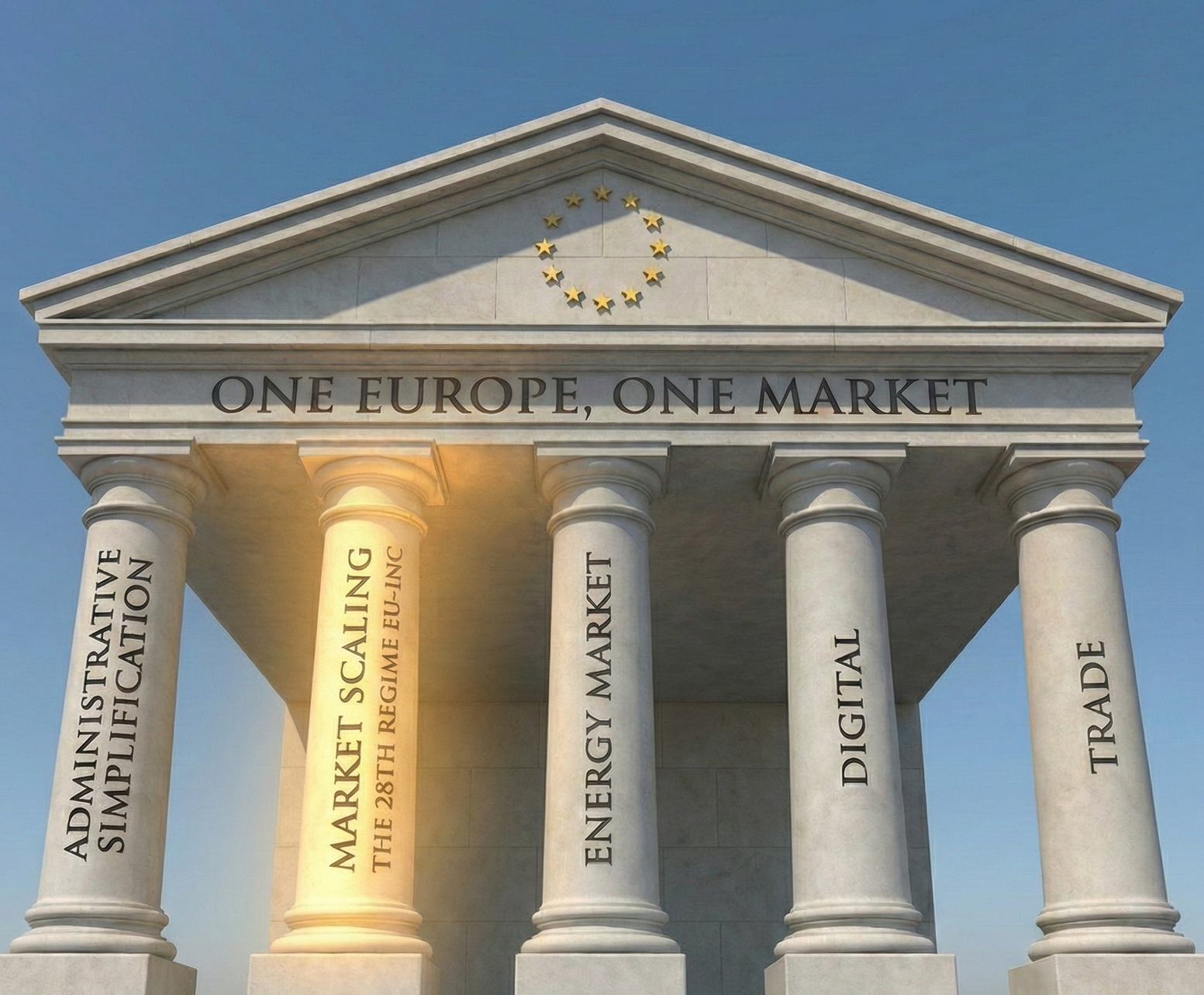
Political framing is now explicit: President von der Leyen is packaging EU-Inc / 28th regime inside a One Europe, One Market roadmap with five building blocks - where pillar 2, build one market, is the relevant lane for this initiative, alongside deeper capital markets. The ambition is framed as reaching One Europe, One Market by end-2027.
Stored in the newsletter archive.
Previous status Updated: 26 Jan 2026
The European Parliament has formally adopted a set of recommendations supporting a harmonised 28th regime for innovative companies, including digital incorporation and cross-border operation features; this will feed into the European Commission's legislative proposal expected in Q1 2026.
At the World Economic Forum, Commission President Ursula von der Leyen publicly backed the initiative under the EU-Inc banner. Discussions now hinge on the regime's design, regulation versus directive, and social safeguards.
Stored in the newsletter archive.

What you'll find on this site
A dated trackerEvery official milestone with its date and its document number, and who holds which position.
A primary-source libraryThe institutional texts (Commission, Parliament, Council, EESC, Committee of the Regions) and a small, sorted set of practitioner and academic analysis.
Analysis and past issuesLonger reads on single questions, and the newsletter archive. Corrections are dated and visible.
Comparisons with the sources shownOne page comparing what the proposals actually say on scope, governance, registry model, employee share ownership, tax principles and dispute resolution.
Get updates
Stay ahead of the changes, subscribe
Sign up to receive updates up to twice a month.
Only 1 more step!
Please check your inbox to confirm your subscription!
We just sent you the email with a confirmation link. Confirm by clicking on it to activate the subscription. - adin@the28thregime.eu
PS: also check your SPAM folder
* Independent project. Not affiliated with EU institutions. Not legal advice.
We may add partner links later; if we do, we’ll label them clearly.