Parliament adds the "tax track" to EU-Inc — what happened today (24 Feb) and what's next before 18 March
In brief
- Parliament's tax subcommittee (FISC) held a public hearing on whether a "28th tax regime" is feasible alongside the upcoming EU-Inc / 28th-regime corporate proposal.
- Three expert groups presented directions; common ground was: targeted scope (startups/scaleups), equity/stock-option treatment as the most pressing tax lever, and administrative simplification over broad harmonisation.
- No law was decided — this feeds into FISC's upcoming report and signals priorities to the Commission ahead of the 18 March draft
Next happens (dates):
- 18 March 2026: Commission proposal is scheduled (Legislative Train tracker).
- 19–20 March 2026: European Council meeting (the “March Council”).
- The Commission President said the EU-Inc / 28th regime proposal should come before the March European Council — so we’re watching for publication any day leading into 18 March.
What happened today(and why it matters)
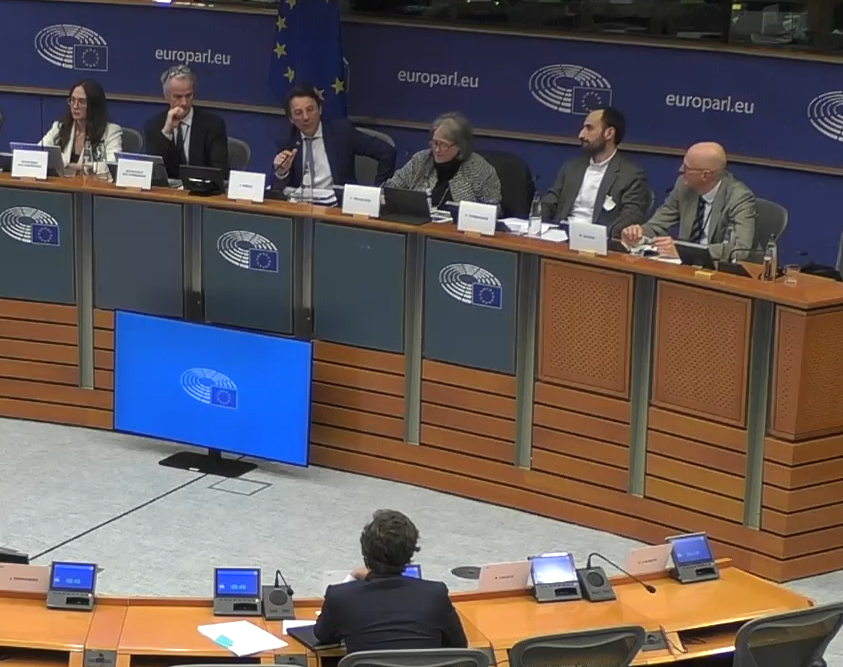
Today, the European Parliament's tax subcommittee (FISC) held a public hearing on the feasibility of a "28th tax regime" — a clear sign that tax barriers and incentives are now being discussed in Parliament alongside the upcoming EU-Inc / 28th-regime corporate proposal. No legal decision was taken; this is a structured step in how Parliament shapes its position while everyone waits for the Commission's draft text.
The rapporteur, Ľudovít Ódor, framed the core question in simple terms: companies cite both bureaucracy and taxation as scaling blockers, so will the 28th regime need a tax element to be attractive in practice? He pushed the invited experts on what a “minimum viable” package could look like that improves real-world usability without becoming a full tax-harmonisation project.
What the experts brought (three angles, one pattern)
The three expert groups differed on how far and how fast this can go, but they converged more than they disagreed: keep the scope targeted, prioritise equity/stock-options as the most visible competitiveness lever, and focus on administrative simplification and interoperability rather than headline tax harmonisation.
Bruegel presented its “Regime 0 / Hub0” concept: a targeted, optional regime for innovative high-growth ventures, delivered through a fully digital EU hub with standardised templates and contracts. Their central tax argument is that employee equity and stock options should be taxed at sale (with a holding period), not at grant or issuance — framed as the most impactful lever for talent attraction and retention across borders. They also stressed that the regime should be a regulation (not a directive) to avoid 27 different national implementations, and signalled openness to enhanced cooperation if that’s what it takes to go deep rather than shallow.
CEPS outlined a layered, modular approach: start with the corporate-law base, then add tax elements focused on interoperability rather than harmonisation. Their building blocks include neutrality (no tax penalty for opting in), cross-border loss relief so losses don’t get stuck when a startup expands, mobility and reorganisation rules to reduce exit-tax friction on genuine intra-EU moves, and practical withholding tax plus VAT interoperability (faster relief, fewer duplicate filings). The logic is explicitly political: roll out modules that are survivable in Council, prove they work, then expand.
ETAF (the European Tax Adviser Federation) supported simplification goals but delivered the strongest feasibility warning: once you touch “real tax rules,” you run into treaty competence and Council unanimity. Their practical proposals were a single entry point for cross-border tax reporting, mutual recognition of submitted data across Member States, and a common working language to reduce friction. On stock options specifically, ETAF agreed these matter for competitiveness but cautioned that preferential treatment only for opt-in firms could create distortions — and were explicit that no income tax or social security should be levied at the moment of option acquisition if any harmonisation is pursued.
Q&A Session
In the Q&A, MEPs from several groups returned to the same pressure point: what is the realistic minimum that makes this regime worth choosing? The answers clustered around three things: digital-by-default setup and recognition, tax neutrality so that opting in doesn’t make a company worse off, and a credible fix for equity/stock-option treatment across borders. A Greens/EFA member also pressed on whether Member State “competition” under the regime could become a race to the bottom; Bruegel’s response was that transparency (not competition) is the goal — give companies clear, comparable information so they can make informed decisions.
If you only follow one page: watch /progress for the dated log, and keep /compare bookmarked for the “one table” view. Comparisson page is updated with the Tax angles from todays public hearing
Sources:
- European Parliament Legislative Train — “28th regime for innovative companies” (shows Commission proposal scheduled for 18 March 2026)
- https://www.europarl.europa.eu/committees/en/feasibility-of-...
- https://multimedia.europarl.europa.eu/en/webstreaming/fisc-c...
- https://www.ceps.eu/
- https://etaf.tax/
- https://www.europarl.europa.eu/cmsdata/303156/Michael%20Schi...